TL;DR
Creative automation software produces and adapts marketing creative at scale, so a small team can ship what once took a studio. In 2026 the category splits in two: platforms that scale and serve creative you already designed, and AI-native tools that generate the creative itself. The best creative automation software for you depends on which of those jobs you are trying to automate.
- Celtra and Bannerflow are best for enterprise brands and in-house ad teams, because they turn one master design into thousands of on-brand ad versions and serve them across formats, markets and channels.
- Presti is best for retailers and brands, because it generates on-brand product photography and video at catalog scale, rather than resizing an ad you already made.
- AdCreative AI is best for performance marketers, because it generates and scores conversion-focused ad creatives and pushes them straight to Meta, Google and LinkedIn.
- Quick rule: pick a creative management platform to scale and serve creative, and an AI-native generator to create it in the first place. Many teams run both.
Two waves hide inside "creative automation"
What if one designer could produce a full campaign, in every size, language and channel, before lunch? That is the promise of creative automation software. You feed it a design or a product, and it returns the finished creative in minutes, without a studio, a resizing marathon or a reshoot. The catch is that "creative automation" now describes two very different kinds of tool, and most comparisons blur them into one list.
So let us draw the line clearly. The first wave is the creative management platforms, the tools built to scale and serve creative: you give them a master design and they generate every format, version and localized variant, then push those ads out and optimize them. Celtra, Bannerflow, Rocketium and Creatopy (now The Brief) live here. The second wave is the AI-native creative generators, the tools that make the creative itself from a prompt or a product photo. AdCreative AI and Presti sit here. A management platform is the assembly line; an AI generator is the thing that stamps out the first part.
The line is blurring, to be fair. The management platforms are bolting on generative AI, and the AI tools are adding resizing and brand controls. But the core job still separates them, and it is the fastest way to shortlist. Presti is our own product and sits in the second wave, so we hold its section to the same factual standard as the rest and are upfront about where it is not the right fit.
How we compared these tools
We did not run a single scripted benchmark across all six tools, so we do not report head-to-head test scores. Three of the six do not publish pricing at all, which itself shapes the comparison. Instead we compared them on the criteria that decide whether the software fits your job, all read from each vendor's own pages on 13 August 2026.
- Core job: does the tool scale and serve creative you designed, or generate new creative from scratch?
- Outputs: display banners, social and video, product visuals, and how many formats and versions it can spin out.
- Brand consistency: templates, brand kits or a brand-trained model that keeps a large output on-brand.
- Pricing transparency and real cost: is pricing public, and what does a representative month actually cost, credits, seats and hidden gates included?
- Commercial rights and integrations: can you use the output commercially, and does it plug into your ad, DAM and workflow stack?
We quote standard monthly billing in US dollars; annual plans are usually cheaper. Where a vendor sells credits or per-seat plans, we translate the headline into a rough real cost. Where a vendor publishes no pricing, we say so plainly rather than guess.
Creative automation software at a glance
Wave 1: Creative management platforms: scale and serve the creative
A creative management platform (CMP) does not usually invent your creative. It takes a master concept, or a set of brand assets, and industrializes it: hundreds of format and size versions, localized copy, dynamic variants driven by a data feed, plus approval workflows and ad serving on top. This is the older, enterprise-heavy end of creative automation software, where "automation" mostly means production and operations, not generation. The three pure players below quote on request; Creatopy, now The Brief, sits at the self-serve edge of this wave and does publish prices.
Celtra
Celtra calls itself a creative automation company, and it is built for scale. You start from a master design and Celtra adapts it into thousands of on-brand versions across formats, placements, audiences and markets, with a node-based generative design system, predictive AI that flags likely performance before launch, and Dynamic Product Ads as an add-on. It connects to more than 100 tools, naming Adobe, Google Ad Manager, Meta, The Trade Desk and DAMs such as Bynder. Celtra cites 400-plus creative teams and enterprise names including Nike, Unilever, Spotify, McDonald's and Adidas.
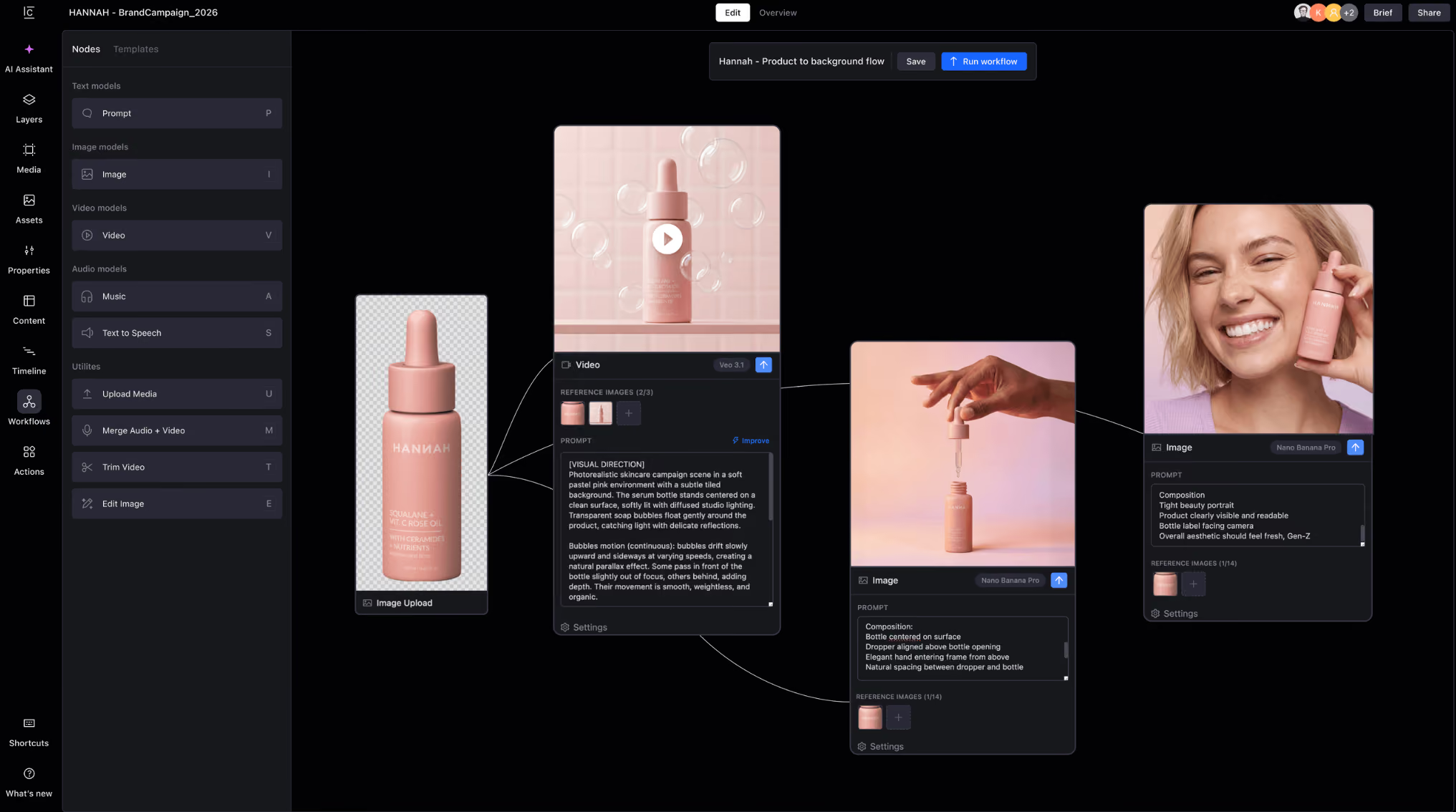
Best for: large advertisers and agencies that produce high volumes of on-brand ad creative across many formats and markets.
Where it falls short: no public pricing and no self-serve entry; the core platform plus serving volume plus add-ons (Dynamic Product Ads, predictive AI, custom APIs) make total cost hard to estimate up front. It is aimed at ad production, not product photography.
Pricing: Not publicly listed. Celtra's pricing page states it builds a bespoke package by platform, team size, creative volume and serving volume, with no tiers or figures disclosed, so budget for an enterprise contract and a sales conversation.
Bannerflow
Bannerflow positions itself as an AI-powered creative automation platform that runs the whole ad lifecycle, from build to optimization to delivery. Its Creative Studio produces HTML5 display banners, video and rich media, then automates resizing and versioning so one master creative becomes every format you need. It adds dynamic creative optimization, AI-powered translation for multi-market rollouts, and distribution through more than 100 integrations across display, social and DOOH. Bannerflow says it serves 2,000-plus brands and leans toward in-house marketing teams.
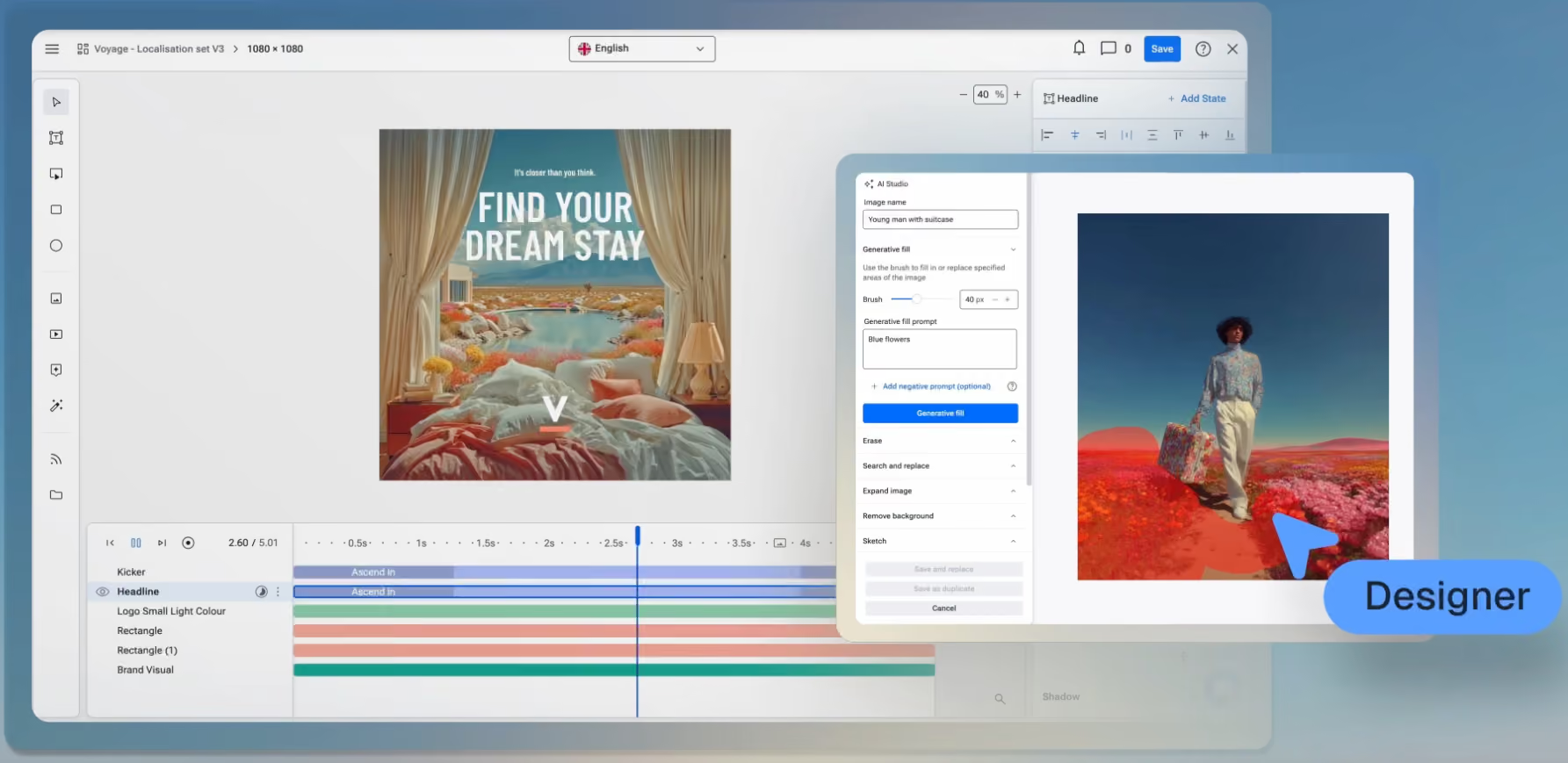
Best for: in-house marketing and creative teams at enterprise brands running display and video ad campaigns across markets.
Where it falls short: strongly display-ad and enterprise oriented, so it is more than a small team or a product-catalog use case needs, and it publishes no public pricing.
Pricing: Not publicly listed. Bannerflow's pricing page shows only "custom pricing, tailored to your team's needs" and a book-a-demo call to action, so expect an enterprise quote rather than a sign-up.
Rocketium
Rocketium now presents as Rocketium AI Studio, an "agentic creative studio" that blends AI agents, brand-trained creative intelligence and human design experts to turn a brief into campaign-ready assets in hours. Its stronger suit is retail media: it builds compliant ads for Amazon Sponsored Products, Walmart Connect, Target Roundel, Instacart and other retail networks, with automated resizing, bulk generation, pixel-level brand-compliance checks, role-based approvals and analytics. Its terms state you own the content you create on the platform. Because part of the offer is human design service, it reads less like a pure self-serve SaaS and more like a managed studio with software underneath.
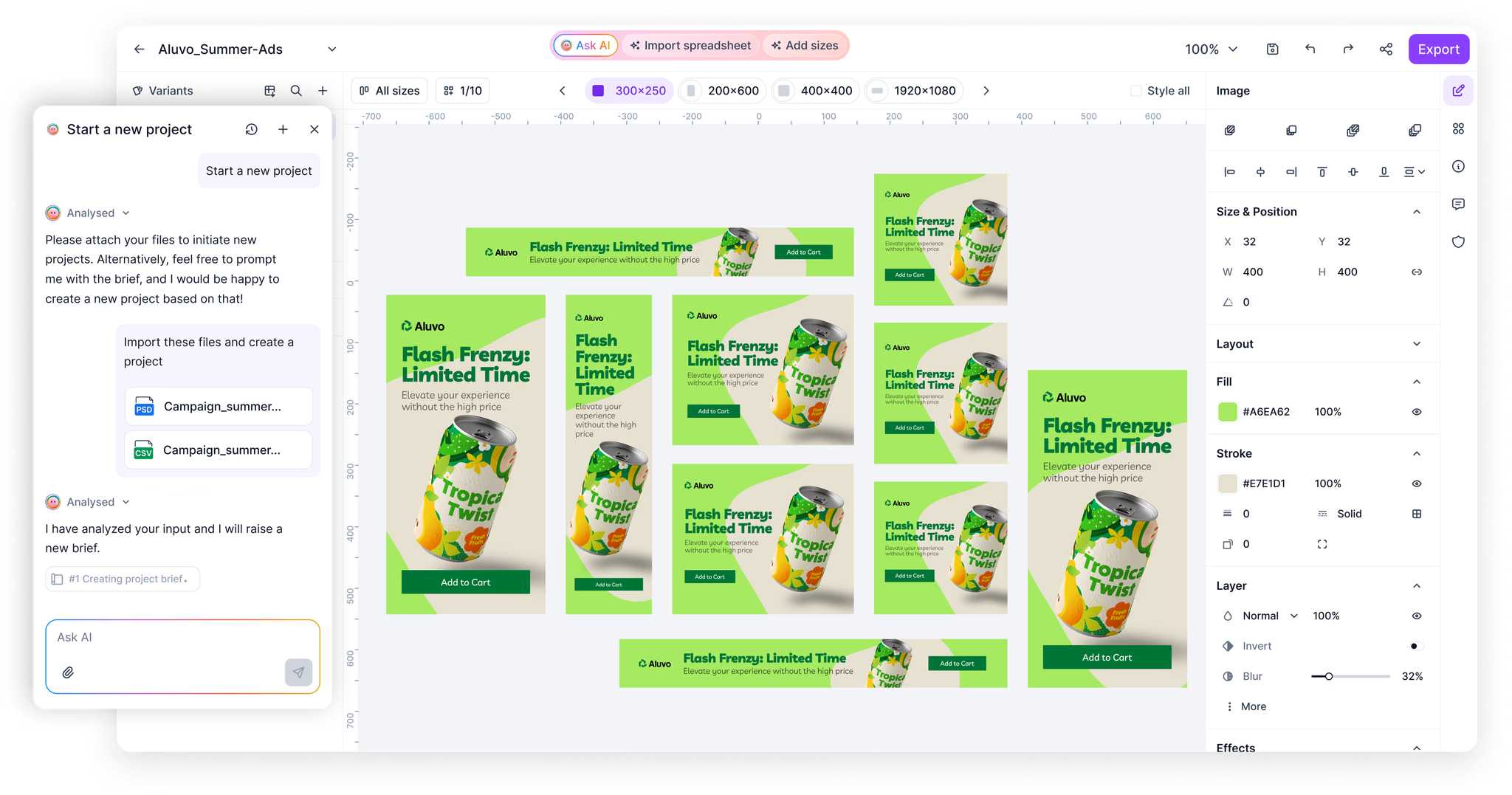
Best for: retail-media and enterprise teams that want scaled, on-brand campaign assets delivered through a managed, agentic workflow.
Where it falls short: pricing is quote-only, the service-blended model is not a self-serve tool, and the speed and savings figures on the site are vendor-reported testimonials rather than independent results.
Pricing: Not publicly listed. Rocketium's pricing page offers a pilot and a custom demo, with only comparative marketing claims (for example "saves 20%+ over agencies") and no plan figures.
Creatopy (now The Brief)
Heads up on the name: Creatopy rebranded to The Brief in 2026, and creatopy.com now redirects to thebrief.ai, so you will meet both names while the change settles. The product is a brand-trained AI ad platform that unifies generation, adaptation, publishing and optimization. It pairs an Ad Studio and a Canvas with 5,000-plus templates, a Banner Generator and Feed Ad Builder that spin one design into many formats, a Banner Resizer, and AI image, video, copy and translation tools. It exports HTML5, MP4, PDF and more, serves ads to a large network list and publishes to Meta and Google Ads. Usefully, it drops the credit meter: AI is "included for normal use" on a fair-use soft cap rather than a per-download counter.
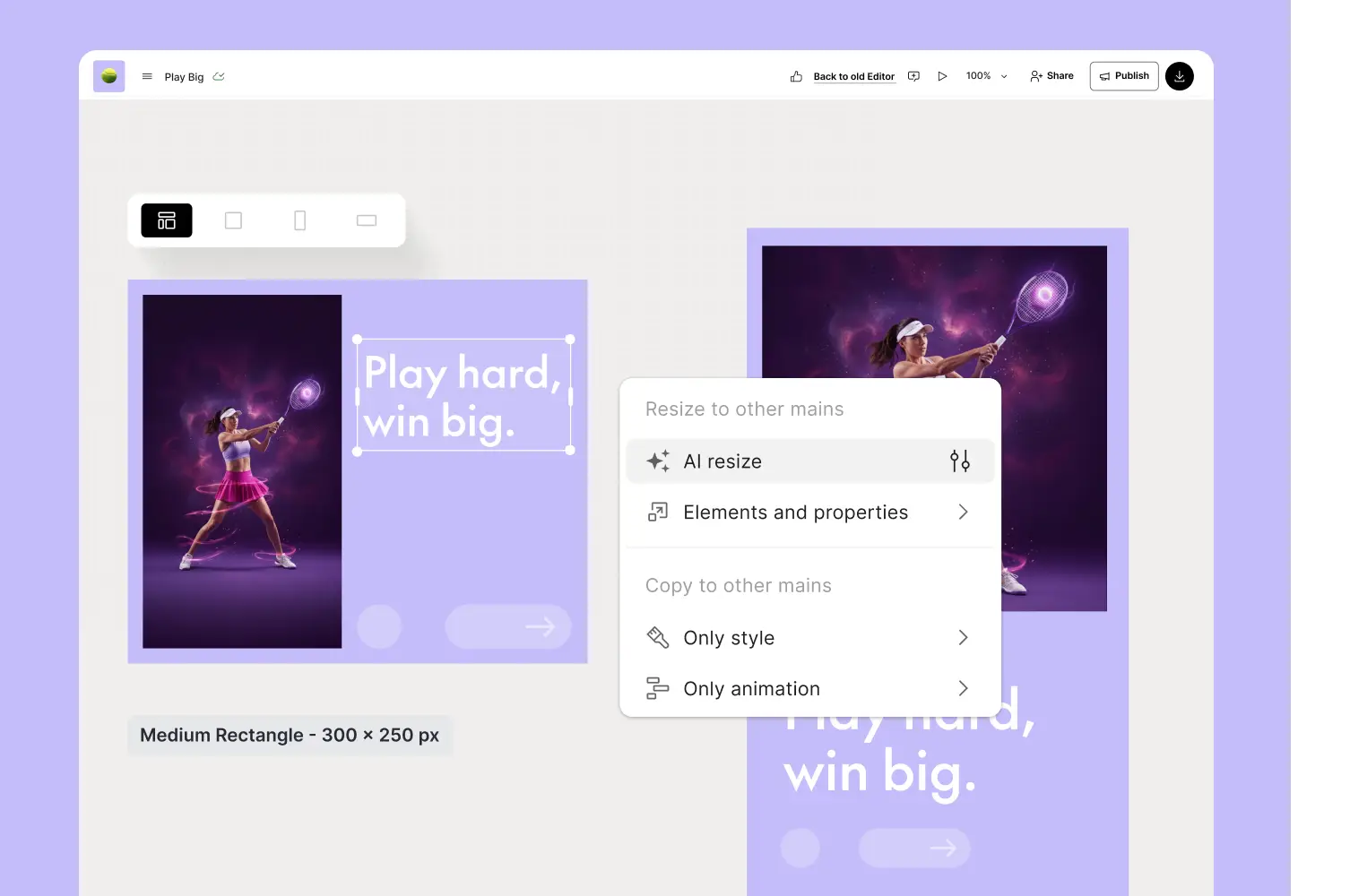
Best for: solo creators, marketing teams and agencies that want template-based ad design plus generative AI, with transparent self-serve pricing.
Where it falls short: the two cheaper plans are single-seat, so collaboration needs the Team plan, and SSO, API, DAM integrations and CMYK export are Enterprise-only. AI is fair-use capped, and the site quotes an inconsistent ad-network count (40-plus on the homepage, 25-plus on the plan rows), worth confirming for your channels.
Pricing: On standard monthly billing, Create (Pro) is $39, Amplify (Ultra) is $99 and Collaborate (Team) is $59 per seat, with Scale (Enterprise) on a custom quote; annual billing is cheaper (roughly $29, $79 and $49 per seat equivalent). Every plan includes a 7-day free trial with no card. Because it is plan-based, not credit-based, the real cost is predictable: a solo marketer pays $39 a month for the generation and export tools.
Wave 2: AI-native generators: create the creative itself
The second wave starts one step earlier. Instead of scaling a design you already made, these tools generate the creative from a prompt, a brand or a product photo. That makes them the answer when the bottleneck is not "resize this into 40 sizes" but "we have nothing to resize yet." The two below take that idea in different directions: AdCreative AI toward performance ad creatives, and Presti toward product photography and video.
AdCreative AI
AdCreative AI generates conversion-focused ad creatives, banners, texts, product photoshoots and videos, and layers data on top. Its Creative Scoring AI predicts a performance and awareness score for each asset, and it can learn from your connected Meta, Google and LinkedIn accounts, while a Competitor Insights feature surfaces rivals' ads. You generate freely and spend a credit only when you download a creative, so the real unit is a finished download, not a render. Now an Appier group company, it is squarely a performance-marketing tool rather than a general design suite.
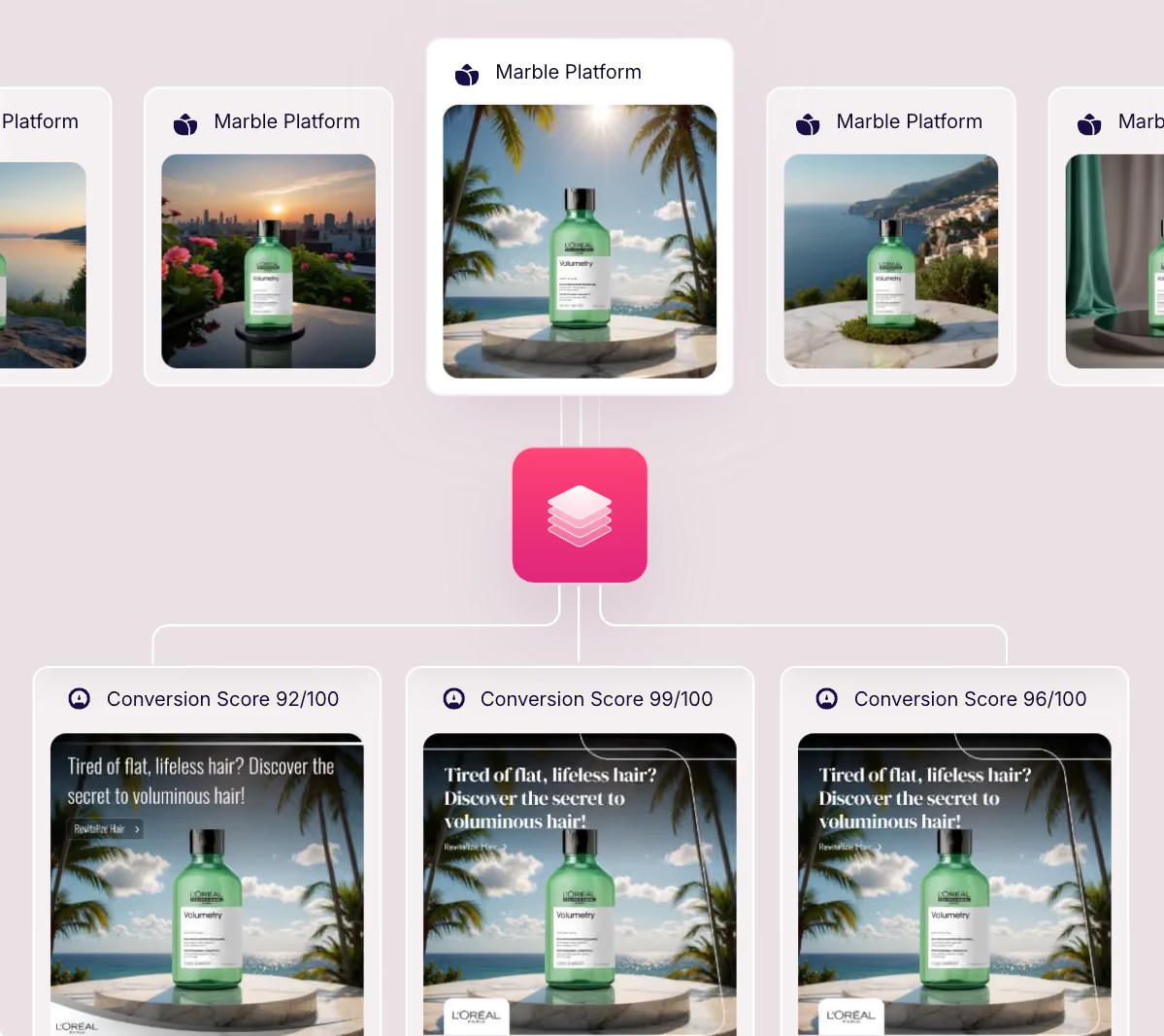
Best for: performance marketers and agencies that want net-new ad creatives with a predicted performance score and one-click publishing to ad platforms.
Where it falls short: the tier jumps are steep, full asset IP rights and "commercially safe" models are called out specifically under Enterprise, and lower tiers are tight on brands and seats (Starter is one brand, one user). Credits renew monthly, so confirm rollover before you rely on it.
Pricing: On standard monthly billing, Starter is $39 for 10 credits (downloads), Professional is $249 for 50, Ultimate is $999 for 100, and Enterprise is custom; higher credit sub-tiers sit within each plan. Annual billing runs about 50% cheaper. Because a credit equals a download and generation is unlimited, cost per usable creative depends on how many you actually export.
Presti
Full disclosure: Presti is our own tool. We hold this section to the same factual standard as the others, quote the same public pricing, and are upfront about where it is not the right fit.
Presti is our AI visual production platform for product photography and video. You give it a product photo, and an agent plans, generates and delivers the visuals: studio-quality packshots, lifestyle staging, 360° spins, close-ups, product swaps, variants, lighting control, infographics and image-to-video. A Brand Skill encodes your visual identity once, so a large catalog stays on-brand across campaigns. Like several tools here, Presti routes each task to a fitting engine rather than locking you to one; its site names Gemini, GPT Image, Veo, Flux, Kling, Seedance and Grok. The workspace adds roles, in-context comments and approval flows, and Enterprise adds API access and custom integrations. Named customers on its site include Wethenew, Creative Co-Op, JJA Group, But, Ashley and Wayfair.
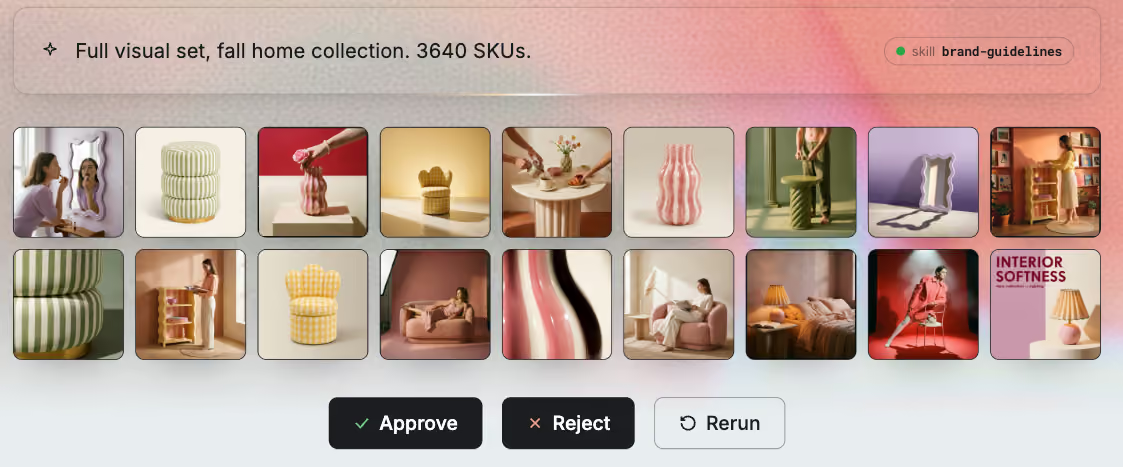
Best for: retailers, marketplaces and brands that need on-brand product photos, 360° spins and video at catalog scale, with team review built in.
Where it falls short: Presti generates product visuals; it is not a display-ad CMP, so it does not do banner resizing, dynamic creative optimization or ad serving the way Celtra or Bannerflow do. You also budget in credits, and for a single hero campaign art-directed pixel by pixel, a traditional studio shoot still has the edge.
Pricing: A free plan gives 60 credits a month, about 20 images or 2 videos. Pro is $99 a month for 1,000 credits, with an image at 3 credits and a video at 30, so roughly 333 images or 33 videos, near $0.10 an image or $3 a video if you spend on one type, with credit rollover. Enterprise moves to volume pricing from $0.20 per credit (large minimums) with SSO, API access and custom integrations. Output resolution and maximum video length are not stated on the pricing page, so confirm them for your use case.
Which creative automation software should you choose
Start with the job, not the logo. Are you scaling creative you already have, or making it in the first place?
- Choose a creative management platform to industrialize ad production. Celtra suits large advertisers scaling on-brand creative across markets, Bannerflow suits in-house teams running global display and video, and Rocketium suits retail-media teams that want a managed, agentic pipeline. All three quote on request.
- Choose Creatopy (now The Brief) if you want that scale-and-serve workflow with transparent, self-serve pricing from $39 a month, plus generative AI built in.
- Choose an AI-native generator when the creative does not exist yet. AdCreative AI is the pick for scored, conversion-focused ad creatives, and Presti is the pick for on-brand product photography and video at catalog scale.
Whichever wave you land in, test it on your own brand and products first. Fidelity, the formats you actually publish, and commercial rights matter more than any headline feature. And do not assume you need only one: plenty of teams generate with an AI-native tool, then scale and serve through a management platform.
For the bigger picture, see our guide of the best AI image to video generators.
What is creative automation software?
Creative automation software produces and adapts marketing creative at scale with little manual work. In 2026 it covers two waves: creative management platforms like Celtra, Bannerflow, Rocketium and Creatopy (now The Brief) that scale a master design into many formats and serve it, and AI-native generators like AdCreative AI and Presti that create the creative itself. The first wave automates production and operations, the second automates the making of the asset.
What is the best creative automation software?
There is no single winner, because the two waves solve different problems. For scaling and serving ad creative, Celtra and Bannerflow lead at the enterprise end and Creatopy (The Brief) at the self-serve end. For generating creative from scratch, AdCreative AI is strongest for performance ad creatives and Presti for on-brand product photography and video. Match the tool to whether your bottleneck is production or generation.
How much does creative automation software cost?
It ranges widely, and three of the six here do not publish prices at all: Celtra, Bannerflow and Rocketium quote on request as enterprise contracts. Among the tools that do publish, Creatopy (The Brief) starts at $39 a month, AdCreative AI at $39 a month for 10 downloadable creatives, and Presti Pro is $99 a month for 1,000 credits (about 33 videos or 333 images). Watch the pricing model, since seats, credits and downloads each meter cost differently.
What is the difference between creative automation and a creative management platform?
A creative management platform (CMP) is one type of creative automation software, the wave built to scale, version and serve creative you have designed, with templates, dynamic creative optimization and ad serving. "Creative automation" is now the broader umbrella that also includes AI-native generators that create the creative itself. Put simply, every CMP is creative automation, but not all creative automation is a CMP.
Can AI automate creative for e-commerce and product catalogs?
Yes. AI-native tools such as Presti generate product photography, 360° spins and video from a single product photo, and keep a catalog on-brand through a reusable brand profile. Creative management platforms then scale those visuals into ad formats and versions for each channel. Many retailers use both, generating the base visuals with an AI tool and industrializing the ad variants with a management platform.

Updated on August 17, 2026
by Marc Goodwin
Works with e-commerce brands at Presti to turn visual content into revenue. His day-to-day is catalog visuals at scale, from what converts on a product page to what a photoshoot really costs and which tools hold up beyond the demo. Based in Pittsburgh.

Ready to enrich your entire catalog?
See how Presti generates every visual your PDPs need at any scale, automatically.