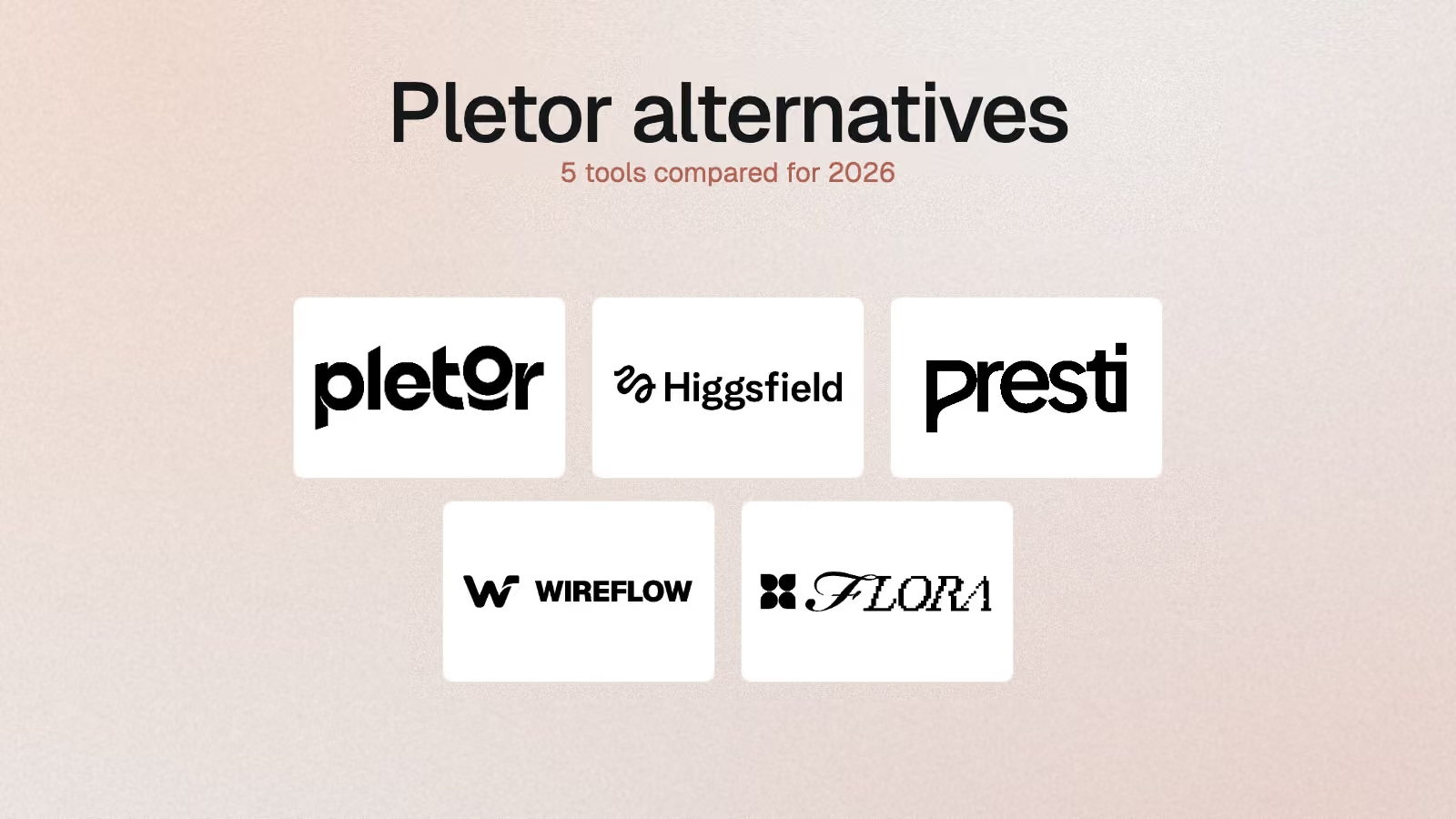
A hands-on look at the best tools like Pletor in 2026, and how to pick the one that fits how your team actually works.
TL;DR
- Pletor is best suited for highly technical creative profiles. It requires more upfront setup and configuration, but enables deterministic, reusable production pipelines across a wide range of models, with API and MCP access.
- Higgsfield is best for social and performance teams that live in video, because its Marketing Studio turns a product URL into UGC, CGI, or cinematic ad variants fast, with camera control most rivals lack.
- Presti is best for e-commerce, brand, and content teams (roughly 2 to 50 people) that want publish-ready visuals at catalog scale, because you brief it in plain language and it produces in volume with built-in review and approval, instead of wiring a canvas yourself.
If you are reading this, you have probably outgrown the "one prompt box, one model" way of making marketing visuals, and you are weighing Pletor against the field. Here is the short version: the best Pletor alternative depends almost entirely on one question, which is whether you want to build a creative pipeline or brief one. Pletor, Wireflow, and Flora AI hand you a canvas to wire together yourself. Presti works like a teammate you brief in plain language. Higgsfield sits slightly apart as a video-first generator. None of these tools is "bad," and we won't pretend otherwise. They are built for different jobs.
In this comparison we'll walk through what Pletor actually is, then four credible tools like Pletor, what each one is good at, and where it falls short. We cover Wireflow, Higgsfield, Presti and Flora AI. We'll be upfront: Presti is our own product, so we've kept the criteria explicit and let you judge the fit. By the end you should be able to match a Pletor alternative to your team size, your appetite for setup, and the kind of output you ship most.
One framing note before we start. "Presti vs Pletor" is not really about which model is better, since most of these platforms plug into the same frontier models. It is about the workflow wrapped around those models. That is the difference that survives the next model release.
How we compared these Pletor alternatives
We judged each tool on five things that decide whether a creative platform survives contact with a real marketing calendar:
- How you work: do you build the pipeline on a canvas, or brief an agent?
- Model breadth: how many image and video models you can reach without juggling subscriptions.
- Brand consistency: whether the tool remembers your identity across runs, or makes you re-brief every time.
- Production and review: batch output, team roles, and sign-off before anything ships.
- Cost model: credits, seats, or usage, and how predictable the bill is.
Pletor alternatives at a glance
| Tool | What it is | How you work | Best for | Free tier / from |
|---|---|---|---|---|
| Pletor | Creative infrastructure ("Zapier for visual marketing") | Infinite canvas plus agents you build from nodes and templates | Technical creative pros building reusable pipelines | Free (200 cr) · from $19/mo |
| Higgsfield | Multi-model video generator with a Marketing Studio | Pick a format or paste a product URL; direct the shot | Social and performance teams that live in video | Free (limited) · from $19/mo |
| Presti | Agent for image and video production at scale | Brief it in plain language; it builds the plan and produces in batch | E-commerce, brand, and content teams shipping catalog volume | Free (60 cr/mo) · Pro $49/mo |
| Wireflow | No-code node canvas with an API on every tier | Wire each step by hand; export workflows as JSON or APIs | Technical teams wanting control and transparent costs | Free (150 cr/mo) · from $24/mo |
| Flora AI | Node-based infinite canvas for creative pros | Branch and chain 50+ models; FAUNA agent assists | Design studios and agencies exploring concepts | Limited free · from $18/seat |
Pricing and free-tier details verified on 29 July 2026. This category moves fast, so it is worth re-checking each vendor's pricing page
First, what is Pletor (and why teams look for alternatives)?
Pletor is an AI creative infrastructure for marketing teams. The clearest way to describe it is "Zapier for visual marketing": you connect nodes on an infinite canvas to build agents that automate repetitive creative tasks, like product photos, UGC videos, and localized ad variants. It pulls in a deep roster of models, including Nano Banana, GPT Image, Flux, Kling, Veo, Sora, Seedance, Higgsfield, and Claude, so you are not locked to one engine. Brand rules, references, and performance data live in one memory, so output stays on-brand across runs.
What stands out about Pletor is the ambition. It exposes API and MCP access, integrates with Meta, TikTok, Google Drive, Zapier, Make, and n8n. On pricing, Pletor starts free with 200 starter credits and no card, then runs from $19/month for Starter (1,000 credits) up to $199/month for Studio (15,000 credits), with custom Enterprise plans; credits refresh monthly and roll over only on the higher tiers. Its own plans name the audience plainly, with one tier labelled for "creative engineers doing client work," and the tagline "if you think in systems, not sessions" fits: this is a platform for technically-minded creative professionals who want to build and own their pipelines, more than for a generalist marketer who just wants finished assets.
So why look for a Pletor alternative at all? The canvas model carries a real cost: someone on the team has to design and maintain the pipeline, and when new models are released, the pipeline may not be relevant anymore to the new model and would need to be rebuilt. Reviewers consistently note a genuine learning curve, and the payoff arrives once your workflows are built, not on day one. That setup tax is exactly the gap the alternatives below try to close, each in a different way.
1. Wireflow, for teams that want maximum control
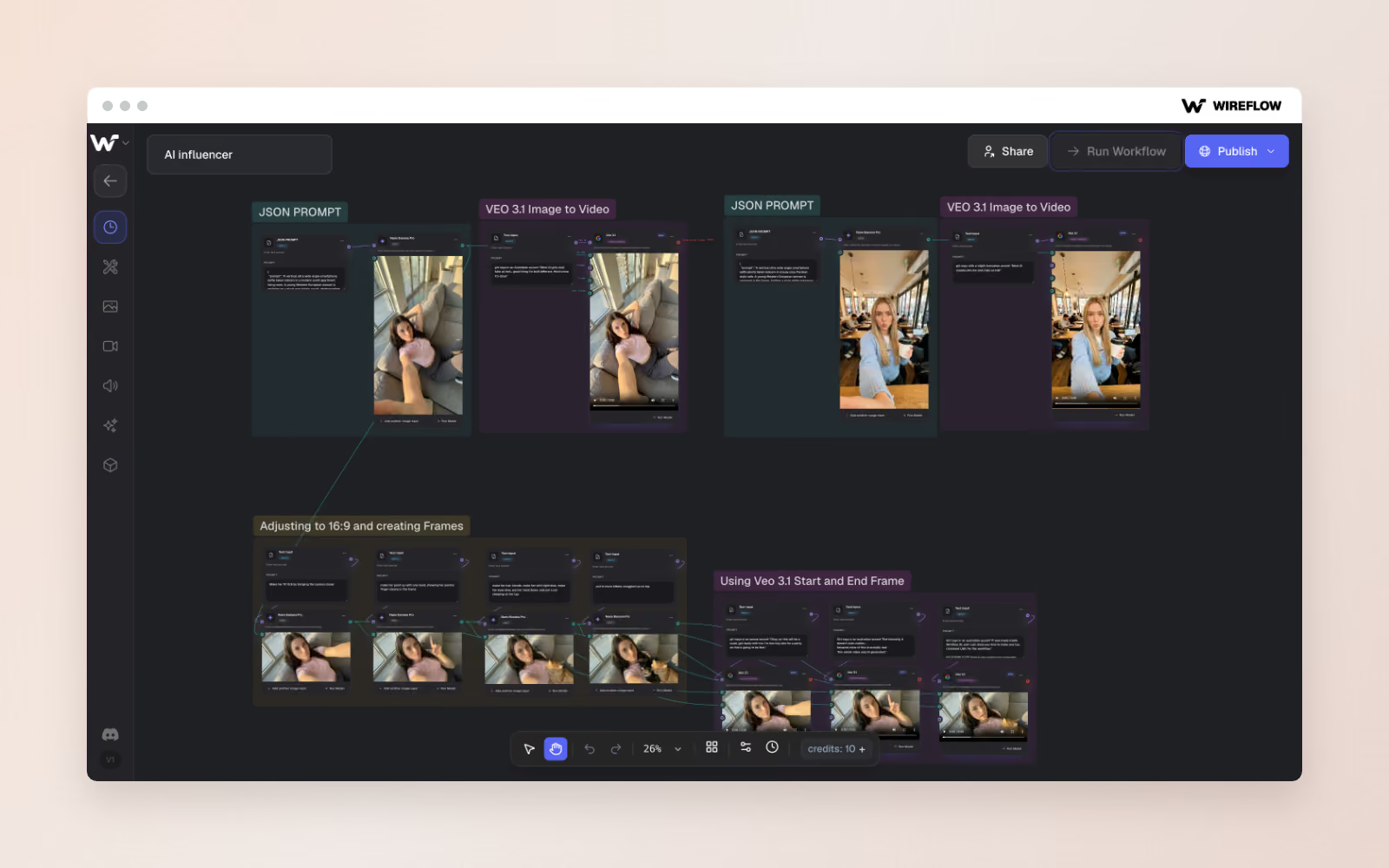
Wireflow is the most direct philosophical cousin of Pletor among these tools like Pletor, and it leans into that. It gives you a no-code node canvas with unified access to 100+ models, including Flux, Runway, Kling, and Veo, then hands you the controls. You build the exact pipeline you need, modify any parameter, and chain any model, with every model unlocked on every plan. There are no agent templates and no feature lock-in by tier.
The standout is portability. Wireflow workflows export as JSON and deploy as production APIs, with a REST API, webhooks, and batch endpoints available on every plan, including the free one. If you are a technical marketing or growth-engineering team that wants to run generation from your own backend, that openness is a real edge over more closed, template-driven systems. Pricing is credit-based and transparent (1 credit equals 1 cent): a free tier includes 150 credits a month, and paid plans run $24/month (Starter), $45/month (Pro), and $249/month (Team), with three-month credit rollover on the higher tiers.
Where it falls short
All that control is also the cost. You are responsible for designing every workflow, and there are fewer ready-made starting points than Pletor's template and community library. Less technical teams may find the blank canvas slower to value.
Best for: technical teams and agencies that want granular control, API-first execution, and pay-as-you-go costs.
2. Presti, the agent you brief instead of a canvas you build
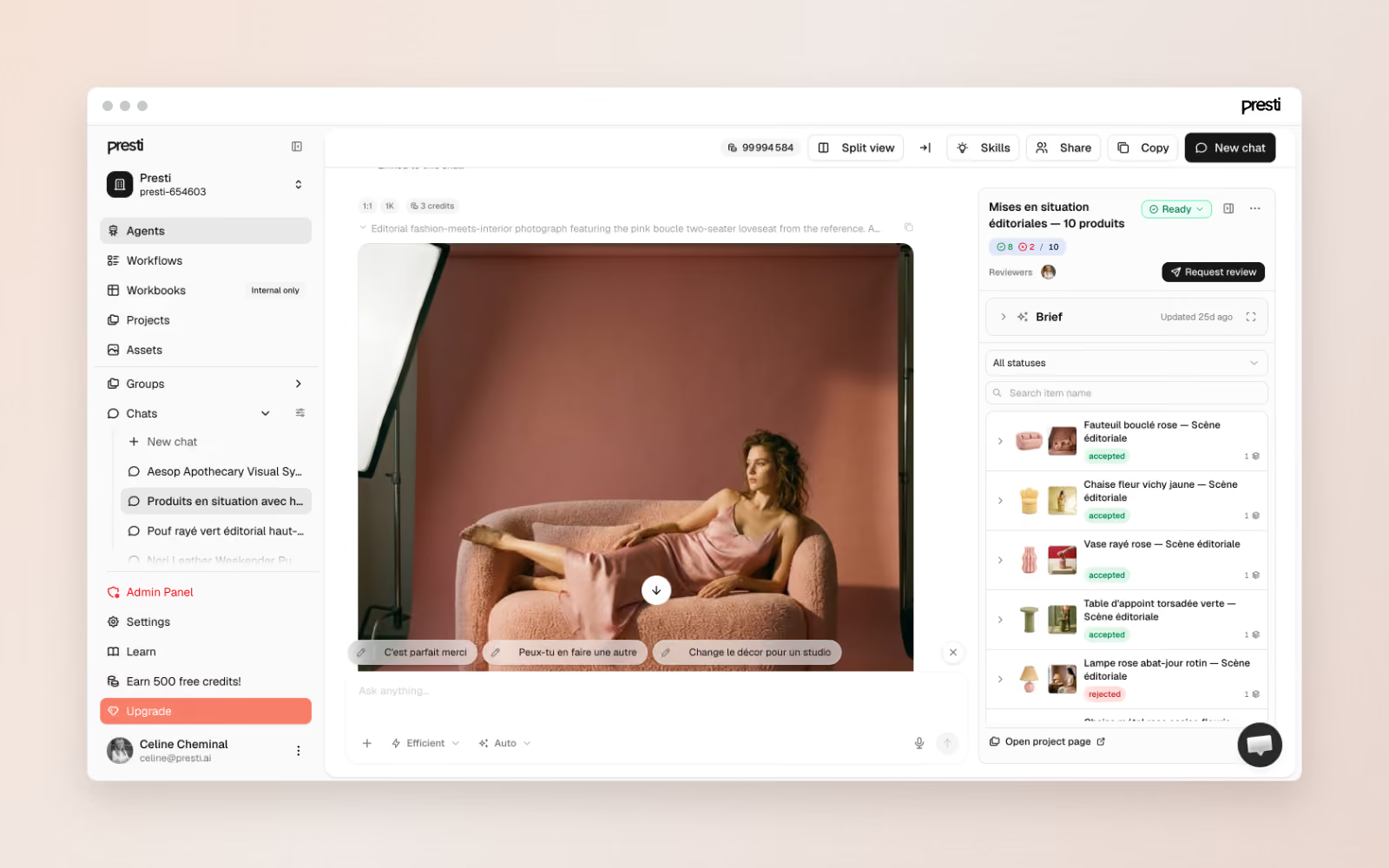
Presti is the alternative we know best, so we'll keep this factual rather than salesy. Where Pletor, Wireflow, and Flora hand you a manual canvas to wire step by step, Presti works like a teammate you brief, not a tool you operate. You describe the outcome in plain language; the agent interprets the brief, asks clarifying questions when something is ambiguous, then gathers the inputs it needs, picks the right model for each task, and plans the production itself. Those questions are the point: they let you brief in a sentence or two, with no prompt engineering, and still get output that matches what you had in mind. You validate the plan, and batch execution runs in the background while your team moves on to the next brief.
Two things keep this workable at scale. "Brand Skills" store your visual identity once and reuse it across every run, so there is no re-briefing and no drift. And Presti behaves like real production software: you organise work into projects with statuses, priorities, and roles, manage it in Table or Kanban views, comment and request reviews in context, and approve or rerun versions side by side so nothing ships without sign-off. That planning and review layer is something most canvas tools leave you to assemble yourself.
On pricing, the free plan gives 60 credits a month, roughly 20 images or 2 videos, with no card required, so you can test Presti on your own products first. Paid plans start at $49/month for Pro (500 credits), with images costing 3 credits and videos 30 credits, and unused credits rolling over for a month.
Where it falls short
If your core need is wiring deeply custom, multi-step pipelines with parameter-level control, or you want to own and export the workflow graph as code, a build-it-yourself canvas will feel less constrained than an agent. Presti optimizes for getting on-brand assets out the door at volume, not for hand-tuning every node.
Best for: e-commerce, brand, and content teams that want publish-ready images and videos at scale without managing a pipeline.
3. Higgsfield, the video-first option
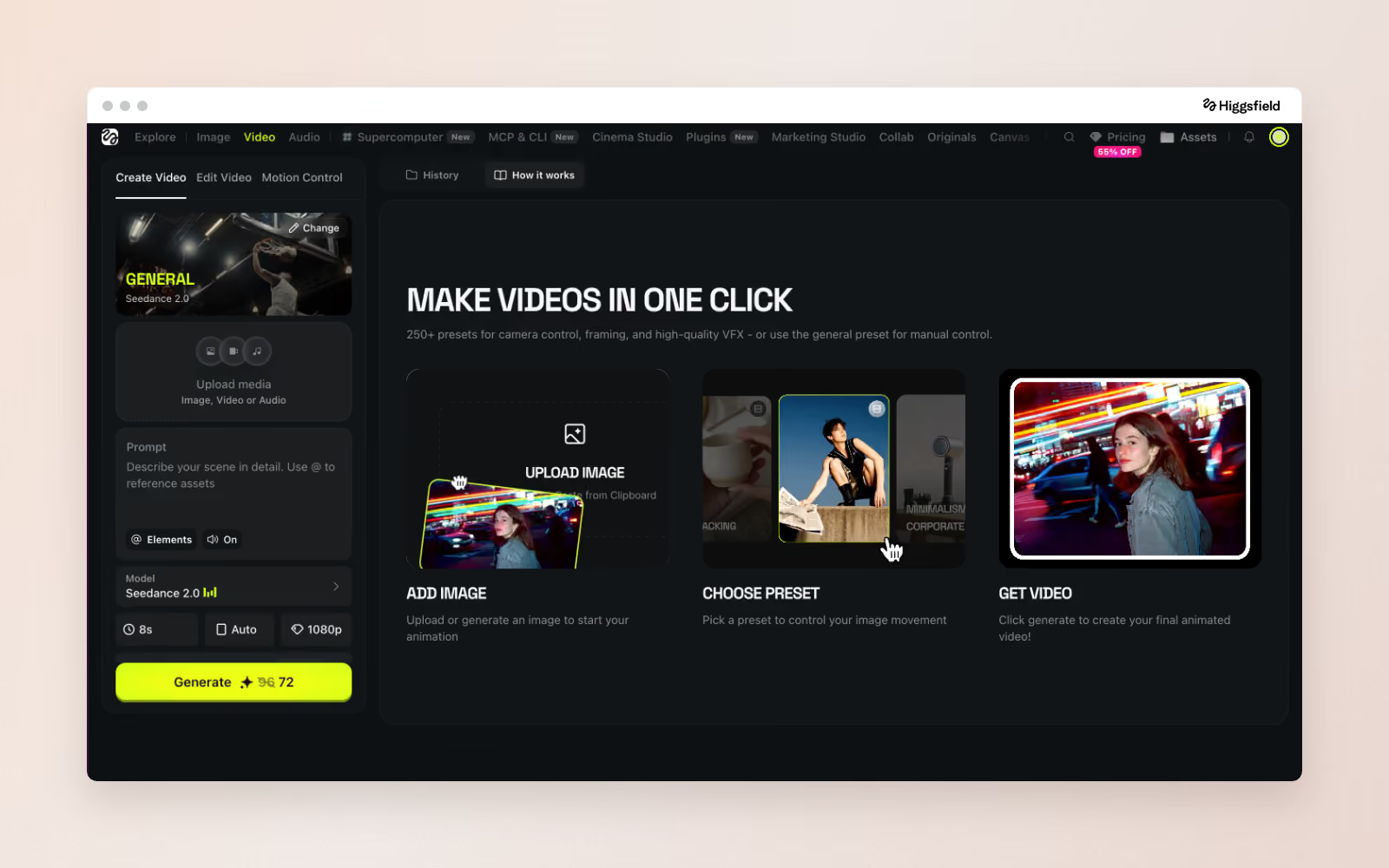
Higgsfield is a different animal, and worth knowing if your output is mostly motion. It aggregates a large roster of frontier video models, including Kling, Sora, Veo, and Seedance, under one subscription, so you can switch between them without separate logins. Three modes matter for marketers: a UGC Builder for hyper-realistic talking-head and testimonial clips, a Cinema Studio with 70-plus camera presets for directorial control, and a Marketing Studio where you paste a product URL and its agent generates a ready-to-export ad in UGC, CGI, cinematic, or AI-directed style.
In several published reviews, the URL-to-ad workflow goes from product page to a usable 15-second clip in minutes, which is genuinely fast for top-of-funnel social testing. It also handles images (Nano Banana Pro, Seedream, Flux, GPT Image) and offers MCP and CLI support for automated pipelines. For social and performance teams shipping dozens of ad variants, that breadth is the draw. On pricing, a free tier offers a small number of credits with no card, and paid plans run from roughly $19/month (Starter) up to about $129/month (Ultra) as of mid-2026.
Where it falls short
Reviewers repeatedly flag the credit system: premium video models burn credits quickly, so the real cost per usable clip can run well above the headline subscription price. Independent reviews estimate roughly $0.60 to $1.00 per usable Kling-quality clip and $3 to $9 per Sora or Veo clip once re-rolls are included. A few also note billing that defaults to annual. Treat the free tier as a test, then model your true cost per asset before committing.
Best for: social and performance marketers who need polished video and UGC ad variants at speed.
4. Flora AI, the creative pro's canvas
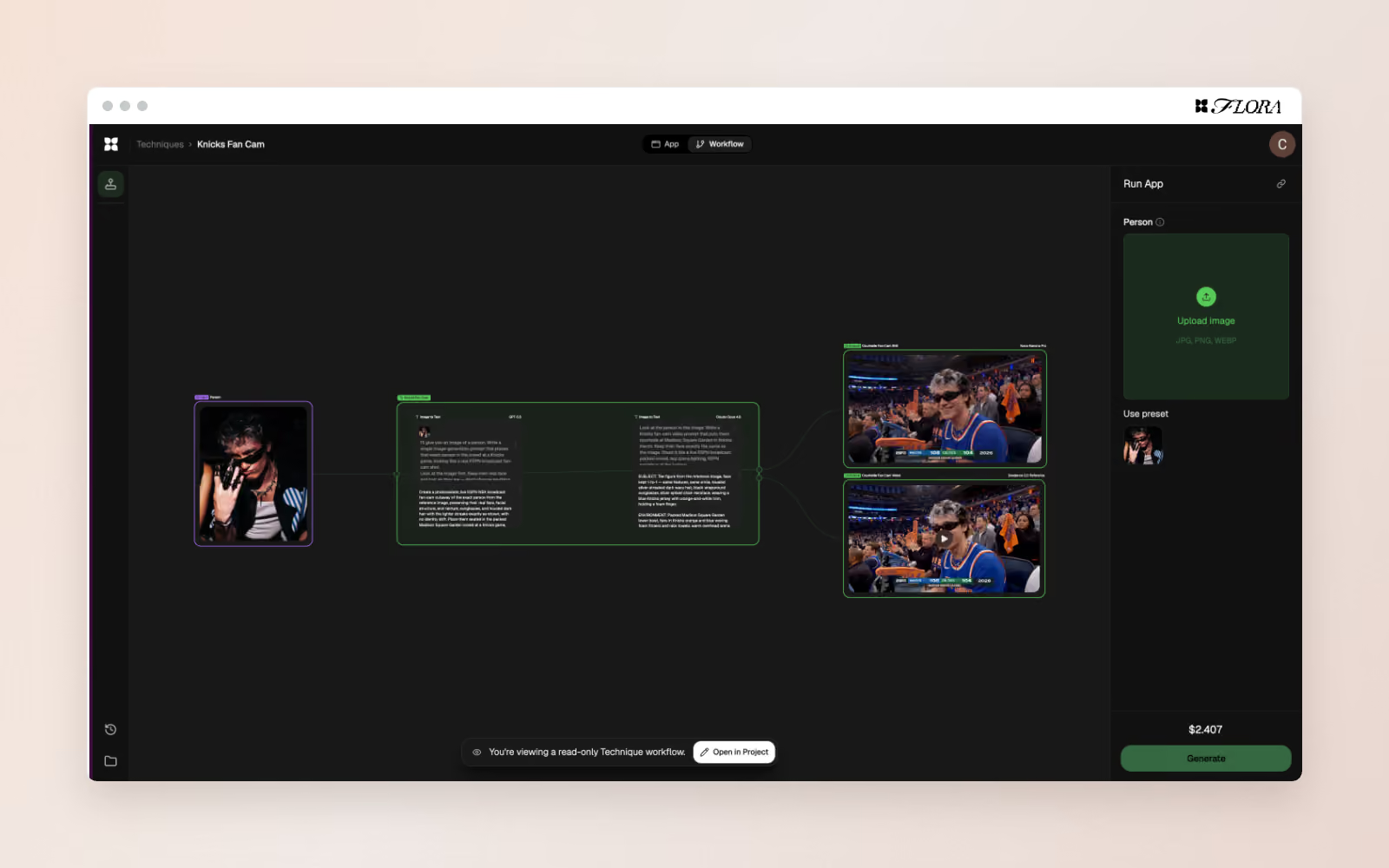
Flora (originally FloraFauna) is the most design-forward of these Pletor competitors. It is a node-based infinite canvas that wires 50-plus text, image, and video models into one workspace, where every output becomes a reusable node you can branch and chain. Its FAUNA agent assists ideation on the canvas, and "Style DNA" lets teams lock a look. The manifesto, "AI creative tools should be more than toys for generating AI slop," tells you who it is for: actual creative professionals. Studios such as Pentagram and Lionsgate are cited among its users.
What stands out here is the craft of the experience. The branching exploration model fits how art directors actually think, and because Flora orchestrates third-party models rather than training its own, new models plug in as they ship. Flora is billed per seat: a limited free tier lets you try the canvas, and paid plans start at $18 per seat per month (Starter), rising to $50 (Pro) and $200 (Max) per seat, with around 20% off annual billing.
Where it falls short
Independent reviewers consistently mention a real learning curve and note that advanced video models can drain credits fast. The free tier is tight, so it is more a taste than a trial. Flora rewards teams building repeatable pipelines, not someone chasing a one-click result.
Best for: design studios, agencies, and art directors who want a polished canvas for exploration and repeatable creative workflows.
How to choose between these tools like Pletor
Strip away the feature lists and the decision comes down to a few honest questions:
- Do you want to build a pipeline or brief one? Build it: Pletor, Wireflow, Flora. Brief it: Presti.
- Is your output mostly video? Then Higgsfield deserves a serious look, alongside whichever platform handles your static work.
- Do you need API-first, exportable workflows? Wireflow is the most open; Pletor and Flora offer API and MCP too.
- How much setup time can you spare? If the answer is "none, we have a calendar to feed," an agent that produces in batch with built-in review will pay off faster than a canvas.
There is no universal winner here, and any roundup that crowns one would be selling you something. The right Pletor alternative is the one whose default way of working matches your team's.
Conclusion: which Pletor alternative fits you?
The five tools split cleanly once you stop comparing models and start comparing workflows:
- Pletor for technically-minded creative teams and creative engineers that want to build and own a deep, reusable creative system.
- Presti for e-commerce, brand, and content teams that want to brief an agent and get on-brand assets at scale, with review built in.
- Wireflow for technical teams that prize control, transparent usage pricing, and exportable, API-first workflows.
- Higgsfield for social and performance teams whose main output is video and UGC ad variants.
- Flora AI for design studios and agencies that want a craft-first canvas for exploration.
If you take one thing away, make it this: pick for how your team works, not for the longest model list. The models will keep changing. Your workflow is what you live in every day.
What is the best alternative to Pletor?
There is no single best alternative, because the right choice depends on how your team works. For teams that want to brief an agent rather than build a canvas, Presti is the closest fit; for maximum control and exportable workflows, Wireflow; for video-led output, Higgsfield. Match the tool to your workflow and output type rather than to a feature count.
Presti vs Pletor: which should I choose?
Choose Pletor if you want to build and maintain your own creative pipelines on an infinite canvas with agents and API access. Choose Presti if you would rather brief the work in plain language and have an agent produce it in batch, with brand memory and team approval built in. It is a "build it" versus "brief it" decision more than a model-quality one.
Is Pletor free?
Yes, Pletor lets you start free with 200 starter credits and no credit card, so you can build your first pipelines before committing. Paid plans run from $19/month (Starter, 1,000 credits) up to $199/month (Studio, 15,000 credits), with custom Enterprise pricing for larger teams. Figures verified on 29 July 2026.
Are there free alternatives to Pletor?
Yes. Most tools here offer a free entry point. Presti gives 60 credits a month, Wireflow 150 credits a month, while Higgsfield and Flora AI both offer limited free tiers. None requires a card to start. Free tiers are best treated as tests; model your real cost per asset before scaling. Figures verified on 29 July 2026.
Do these Pletor competitors use the same AI models?
Largely, yes. Most of these platforms orchestrate the same frontier image and video models, such as Flux, Nano Banana, Kling, Veo, and Sora, rather than training their own. That is why the meaningful difference between them is the workflow and the brand and review layer wrapped around the models, not the raw generation quality.

Updated on July 29, 2026
by Maximilien Lefevre
Chief of design at Presti, where he helps teams turn a rough idea into a finished product visual. He works with AI image and video models every day and knows the generation canvases these guides compare from the inside. Based in Paris.